Frequently Asked Questions
General & Basics
What exactly is reflexology?
It is a therapeutic method of relieving pain by stimulating predefined pressure points on the feet, hands, and ears.
Is it the same as a foot massage?
No. While massage works on soft tissue to relax muscles, reflexology targets specific "reflex" points that correspond to internal organs and systems.
How long is a typical session?
Most sessions last 60 minutes, though express 30-minute or extended 90-minute sessions are often available.
Does reflexology hurt?
Generally, no. It should be deeply relaxing. However, some reflex points may feel "tender" or "crunchy" if there is a blockage in the corresponding body area.
How many sessions do I need to see results?
While one session is relaxing, a series of 4–6 sessions is usually recommended for chronic issues.
Preparation & Logistics
What should I wear?
Wear comfortable, loose-fitting clothing. Only your shoes and socks will need to be removed.
Do I need to do anything to my feet beforehand?
Just ensure they are clean. You don't need a pedicure, and reflexologists are used to seeing all types of feet!
Can I eat before my appointment?
It is best to wait at least an hour after a heavy meal so your body can focus on healing rather than digestion.
What information do I need to provide?
You’ll likely fill out a health intake form covering your medical history, current medications, and any specific areas of pain.
Is there a cancellation policy?
Most practitioners require 24 to 48 hours' notice to avoid a cancellation fee.
Health & Safety
Are there any contraindications (reasons I shouldn't go)?
Yes. Avoid reflexology if you have a foot fracture, active gout in the foot, or a deep vein thrombosis (blood clot).
Can I have reflexology while pregnant?
Yes, but it is often recommended to wait until the second trimester. Always inform your practitioner so they can avoid certain "induction" points.
Is it safe for children or the elderly?
Absolutely. The pressure is adjusted to be much lighter for these age groups.
What if I am ticklish?
Don't worry! Reflexologists use firm, grounding pressure that usually prevents the tickle reflex from being triggered.
Can it help with my specific condition?
While reflexologists don't "diagnose" or "cure," the practice is known to significantly reduce symptoms of stress-related conditions like migraines, IBS, and insomnia.
The Experience
What does a "healing crisis" or "detox reaction" mean?
Some people feel tired or have a mild headache after a session as the body flushes toxins. This is normal and a sign the treatment worked.
Should I talk during the session or stay quiet?
It’s your time! You can chat if you like, but most clients prefer to close their eyes and enter a state of deep relaxation.
Will you tell me what’s "wrong" with me based on my feet?
A reflexologist can identify "congested" areas, but they are not medical doctors and cannot provide a medical diagnosis.
What if I fall asleep?
It is actually a huge compliment to the practitioner! Falling asleep allows your nervous system to reset effectively.
Is music played during the session?
Usually, soft, calming music is played to help you drift into a meditative state.
Post-Treatment & Insurance
What should I do after my session?
Drink plenty of water to help flush out the toxins released during the session and avoid strenuous exercise for a few hours.
Is reflexology covered by my health insurance?
In many cases, yes—especially if the practitioner is registered with an organization like the NHPC. Check your "Paramedical Services" coverage.
Do you offer gift certificates?
Yes, these are popular for birthdays and holidays and can be purchased online.
Can I combine reflexology with other treatments?
Yes, it complements chiropractic care, massage, and acupuncture very well.
How will I feel the next day?
Most people report feeling lighter, more energized, and experiencing a much deeper sleep that night.
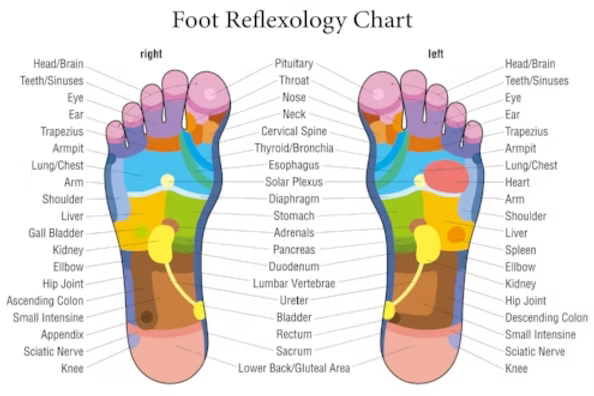
Understanding the reflex points on the feet.